Wind Mitigation Inspection: Save Hundreds on Florida Insurance
A wind mitigation inspection can cut your Florida homeowner insurance premium by 10–45%. Here is how it works and what features qualify for discounts.

Wind Mitigation Inspection: Save Hundreds on Florida Insurance
If you own a home in Florida and you haven't had a wind mitigation inspection, you may be leaving hundreds of dollars on the table every single year.
Wind mitigation inspections are one of the most overlooked ways to reduce your homeowner's insurance premium — and in a state where insurance costs have skyrocketed in recent years, every dollar of savings matters.
Here's how it works, what inspectors look for, and how much you could save.
What Is a Wind Mitigation Inspection?
A wind mitigation inspection is a formal assessment of your home's ability to withstand high winds from hurricanes and tropical storms. The results are submitted to your insurance company on a standardized Florida form (OIR-B1-1802), and your insurer uses the findings to calculate discounts on the wind portion of your premium.
The wind portion of a Florida homeowner's policy is often the largest component — sometimes 50–70% of the total premium. Discounts on this portion can be substantial.
How Much Can You Save?
Savings vary based on your home's features and your insurer, but real-world results from our clients include:
- $200–$800 per year in premium reductions for homes with qualifying features
- Payback period of 1–3 months — the inspection typically costs $150–$200 and pays for itself almost immediately
- Discounts that compound — the more qualifying features your home has, the larger the discount
The inspection is valid for 5 years, so you get 5 years of savings from a single inspection.
What Do Inspectors Look For?
The Florida wind mitigation form evaluates seven specific features of your home:
1. Building Code — Year of Construction
Homes built after the 2001 Florida Building Code (or the South Florida Building Code before that) automatically qualify for some credit, as they were built to higher wind resistance standards.
2. Roof Covering
The type and condition of your roof covering matters. Roofs installed after 2001 to current code qualify for credit. Older roofs or those installed without permits may not.
3. Roof Deck Attachment
This is one of the most impactful factors. Inspectors look at how the roof sheathing (the plywood or OSB under your shingles) is attached to the roof structure.
- 6-inch nail spacing — maximum credit
- 6d nails or 8d nails at wider spacing — partial credit
- Staples — no credit (and a significant vulnerability)
We access the attic to measure nail spacing and document the attachment method with photos.
4. Roof-to-Wall Connection
How the roof structure connects to the walls of your home is critical in a hurricane. There are four levels:
- Double wraps — strongest connection, maximum credit
- Single wraps — good connection, significant credit
- Clips — moderate connection, some credit
- Toe nails only — no credit (roof can lift off in high winds)
This is another attic inspection item. We photograph the connections at multiple locations.
5. Roof Shape
Roof geometry significantly affects wind performance:
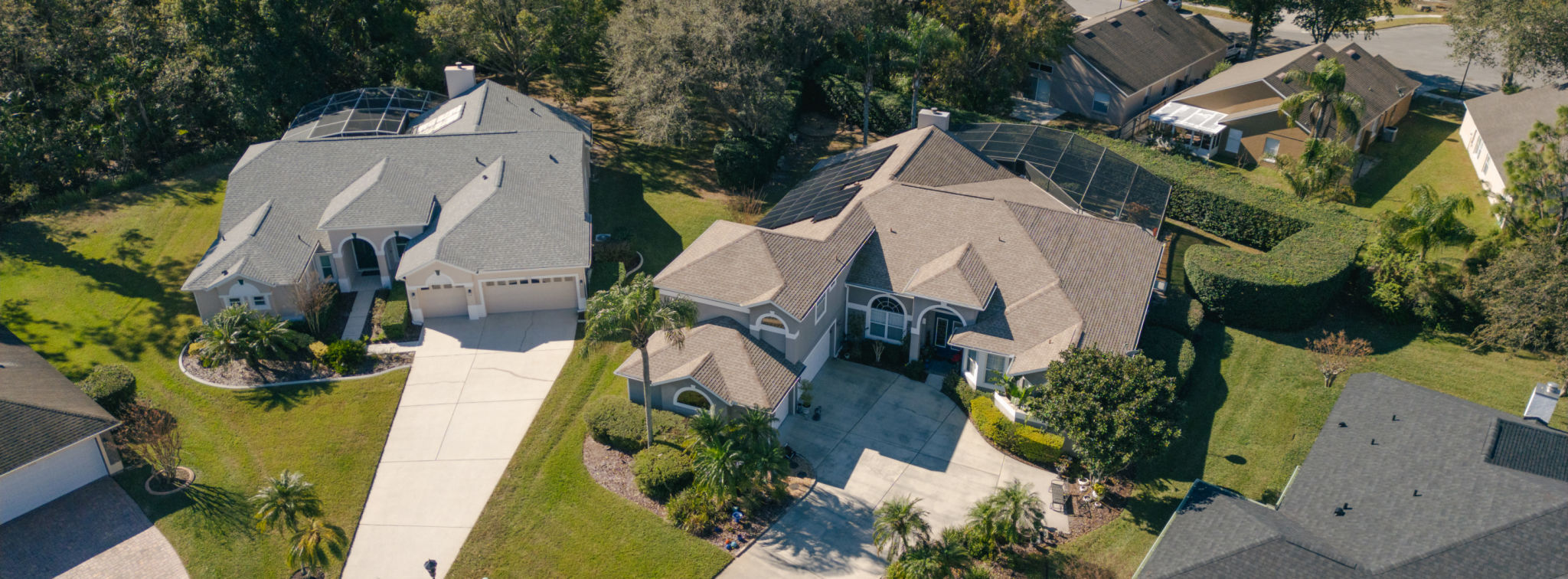
- Hip roof (slopes on all four sides) — maximum credit, best wind performance
- Combination hip/gable — partial credit depending on the percentage of hip
- Gable roof (triangular ends) — no credit; gable ends are vulnerable to wind pressure
If your home has a hip roof, this alone can generate a meaningful discount.
6. Opening Protection — Windows and Doors
This covers how well your windows, doors, and skylights are protected against wind-borne debris:
- Impact-resistant glass (rated to current Florida standards) — maximum credit
- Impact-resistant doors with impact glass — credit
- Accordion or roll-down shutters — credit
- Panel shutters (plywood or aluminum) — partial credit
- No protection — no credit
This is often the most expensive feature to upgrade, but the insurance savings can help offset the cost over time.
7. Secondary Water Resistance (SWR)
A secondary water barrier is a layer of protection under the roof covering that prevents water intrusion if shingles are lost in a storm. It's required in new construction but absent in most older homes.
- Self-adhering polymer-modified bitumen (peel-and-stick) — maximum credit
- Foam adhesive applied to roof deck seams — credit
- No SWR — no credit
Which Homes Benefit Most?
Wind mitigation inspections provide the greatest savings for:
- Homes built after 2001 — likely to have multiple qualifying features built in
- Homes with hip roofs — the shape alone generates significant credit
- Homes with impact windows and doors — major credit for full protection
- Homes where the prior owner added hurricane straps — common in renovated older homes
Even older homes with few qualifying features benefit from the inspection — at minimum, you'll know exactly where you stand and what upgrades would generate the most savings.
What If My Home Doesn't Qualify for Many Credits?
The inspection still has value. You'll receive a documented report of your home's current wind resistance features, which:
- Establishes a baseline for future improvements
- Confirms your current premium is accurate (you're not overpaying for features you don't have)
- Identifies which upgrades would generate the most insurance savings
In some cases, adding hurricane straps, upgrading to a hip roof during a re-roof, or installing impact windows can pay for themselves in insurance savings within a few years.
How to Schedule a Wind Mitigation Inspection
The process is straightforward:
- Schedule the inspection — takes 45–90 minutes
- Inspector accesses the attic and exterior to document all seven features
- Receive the completed OIR-B1-1802 form within 24 hours
- Submit to your insurance agent — they'll apply the discounts at your next renewal or immediately
We recommend combining a wind mitigation inspection with your regular home inspection or four-point inspection to save time and money.
Frequently Asked Questions
Do I need a wind mitigation inspection if my home is new? Yes — even new homes benefit. The inspection documents the features that were built in, and your insurer needs the form to apply the credits.
Can I use an old wind mitigation report? Reports are valid for 5 years. If yours is older, you'll need a new one. If your roof has been replaced since the last inspection, you'll also want a new report — a new roof often improves your rating.
What if my insurer doesn't offer wind mitigation discounts? Florida law requires insurers to offer discounts for wind mitigation features. If your insurer isn't applying them, it may be time to shop for a new policy.
Is the inspection required? No — it's voluntary. But given the potential savings, it's almost always worth doing.
Schedule Your Wind Mitigation Inspection
Gulf Coast Home Inspection provides wind mitigation inspections throughout Southwest Florida, including Port Charlotte, Punta Gorda, Sarasota, Fort Myers, Cape Coral, Venice, Englewood, and surrounding communities. We're InterNACHI Master Certified and licensed by the State of Florida (HI14129).
Book your wind mitigation inspection online or call (941) 249-7399. Most clients see the inspection pay for itself within the first month of savings.
Further reading: Four-Point Inspection Guide | 10 Things Every Florida Buyer Should Inspect | Wind Mitigation Service | What AI Search Tools Say About Home Inspections
Explore Topics
Written by
Gulf Coast Home Inspection Team
Content creator and writer sharing insights and stories.